
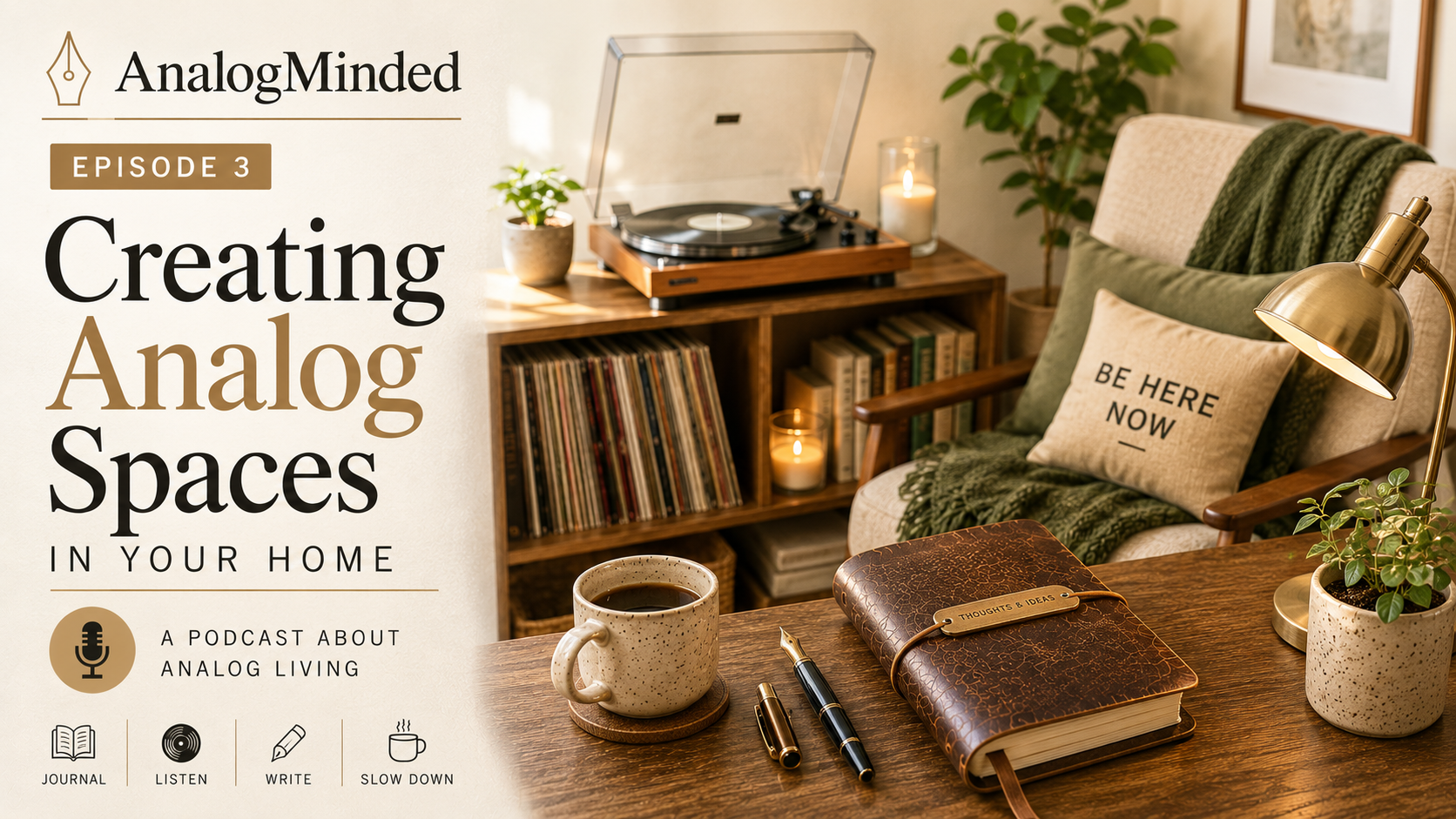
In Episode 3 of AnalogMinded, we explore the importance of creating intentional analog spaces within our homes — places designed for reflection, creativity, calm, and presence in an increasingly distracted world.
From vinyl listening corners and reading chairs to journaling desks, fountain pens, and quiet morning rituals, this episode reflects on how physical environments shape the rhythm of our lives and influence the way we think, create, and pay attention.
We also discuss why analog objects and tactile spaces feel grounding, the beauty of intentional listening through vinyl records, and how even a small corner of your home can become a place for slower and more meaningful living.
In This Episode
- Analog living and intentional home spaces
- Vinyl listening rooms and record players
- Journaling desks and reflective writing
- Fountain pens, notebooks, and tactile creativity
- Slow living and mindful environments
- Why physical spaces affect attention and calm
- Creating a more intentional home atmosphere
- Designing spaces for reflection and creativity
The Importance of Intentional Spaces
The spaces we inhabit quietly shape our daily lives.
Our homes influence:
- how we rest
- how we think
- how we create
- and even how we pay attention
And in a world increasingly filled with screens, notifications, and constant digital stimulation, creating spaces that encourage calm and presence becomes more important than ever.
This episode reflects on the value of building small analog corners within the home — not necessarily elaborate or expensive spaces, but intentional ones.
A reading chair beside a lamp.
A desk with a journal and fountain pen.
A shelf of records beside a turntable.
A quiet corner for coffee and reflection.
Sometimes even small environmental changes can meaningfully shift the pace of life.
Vinyl Listening and Intentional Music
One of the themes explored in this episode is the ritual of listening to vinyl records.
Unlike passive background streaming, vinyl naturally slows the experience down.
You select an album.
Remove the record carefully from its sleeve.
Place it on the turntable.
Lower the needle.
Sit and listen.
The physical interaction changes the experience entirely.
Music becomes immersive again.
And perhaps that’s part of what analog living offers more broadly:
the return of intentionality.
Journaling Spaces and Reflective Living
This episode also reflects on the importance of creating dedicated spaces for journaling, writing, and quiet creativity.
A notebook.
Warm lighting.
A comfortable chair.
A few favorite fountain pens.
Soft music playing quietly in the background.
Over time, these spaces begin carrying emotional meaning.
The environment itself becomes associated with stillness, thoughtfulness, and reflection.
And perhaps that’s something many modern homes are missing:
spaces intentionally designed for quiet attention rather than distraction.
Why Analog Objects Feel Grounding
Vinyl records.
Hardcover books.
Paper notebooks.
Mechanical pencils.
Wood furniture.
Fountain pens.
These objects age well.
They develop texture, wear, and character over time.
Scratches.
Folded pages.
Ink stains.
Patina.
And often, those imperfections make them feel even more meaningful.
Unlike disposable digital experiences, analog objects carry physical memory and presence.
Listen to Episode 3

Final Reflection
Creating analog spaces isn’t about rejecting technology.
It’s about creating environments that encourage reflection, creativity, calm, and slower rhythms of life.
Maybe all it takes is a chair beside a window.
A turntable.
A desk.
A notebook.
A quiet corner of the home.
Small spaces can reshape the pace of daily life.
Slow down.
Create thoughtfully.
Stay AnalogMinded.